ChatGPT
 Claude
 Gemini
 Grok
 Perplexity

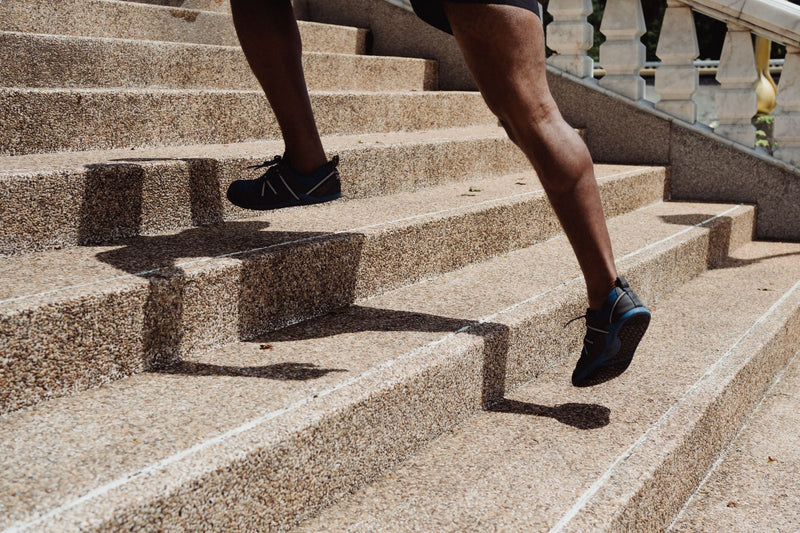
Late in a run, your feet tire first, the ankle rolls and the rest of your form follows. Here is how to spot it in your own stride and what to train.
Late in a run, your feet tire, the ankle starts to roll, and the rest of your form follows it. The knee drifts with the ankle and the stride you had in the early miles comes apart. Training the feet your stride lands on gives the rest of the leg a steadier base when you are tired.
Plenty of things tire on a long run. This page is about the one most advice skips: the foot.
Form falls apart from the ground up: feet, then ankle, then knee, then stride
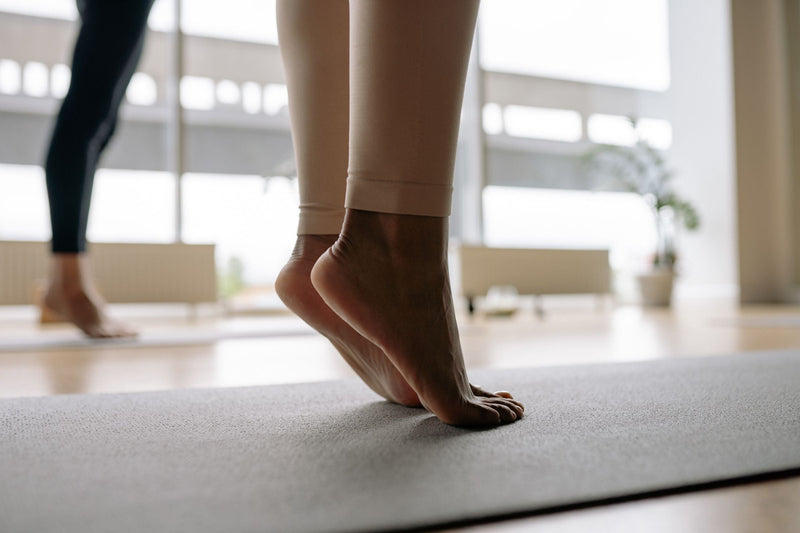
Your stride is only as strong as the feet it lands on. Every stride lands on 26 bones and dozens of small muscles, and when those muscles tire, the breakdown often runs up the leg in this order:
- Feet: the small muscles under the arch tire and react more slowly.
- Ankle: with less support from the foot, the ankle wobbles and rolls.
- Knee: the knee follows the ankle.
- Stride: your technique falls apart in the last miles.
In the B2R Level 1 video, running coach Eric Orton teaches the same chain from the other direction. The work starts at the big toe and the arch and moves up through the muscles above the knee, the side of the hip and the core. That is why the program starts with the foot instead of the hips.
Fit runners still fade, because shoes do not train the part that gives out
You can have the fitness for the distance and still lose your form late. Shoes can support a foot, but they cannot strengthen it. A supportive shoe helps the landing, but it does not load the small muscles of the foot on purpose, so those muscles never get trained by the shoe.
A strong runner whose feet have never done this kind of work still has the same first job as a beginner: train the foot.
More miles alone stop making you stronger
The usual advice for late-run breakdown is more endurance. More of the same running builds your running, but it does not give the feet their own work. That is why mileage alone can stop making you stronger, and why a runner can add miles and still see the same sloppy finish.
If you recognize any of these, your feet are worth a look:
- Your form falls apart in the last miles, even on runs you are fit for.
- Your ankles feel wobbly on uneven ground, especially when you are tired.
- Adding mileage has stopped helping your finish.
You can see where it starts with two short clips of your own stride
You do not need a lab to check this. Film thirty seconds of your running early in a run, then thirty seconds near the end, on the same stretch if you can. Watch the ankle first.
Here is what that comparison can look like for a trail runner on a long run over rocky ground. This example is constructed to show the pattern, not measured data.
| Early miles | Last miles | |
|---|---|---|
| Feet | Steady on the rocks | Tired, slower to react |
| Ankle | Holds on uneven ground | Rolls on the same ground |
| Knee | Tracks over the foot | Follows the ankle |
| Stride | Smooth | Falls apart |
If the ankle changes before anything else, the feet are a good place to start training. Then compare your clips with the free running form video in the two free B2R videos on our Resources page. Most people spot one thing straight away.
Train the feet so your form has a steadier base late in a run
To train the foot, give it a surface where it cannot rest. The B2R Slant Wobble Board is angled and unstable at the same time, so the arch and ankle work on every repetition. You train barefoot, so the foot does the work instead of a shoe.
Balance poles keep you steady while you learn. The Level 1 video turns the board to change the work: facing uphill, then sideways, then downhill. You hold each position only as long as your form holds, then switch feet, and build time from there.
Each level's video also has a Run Form section, which shows what good technique looks like so the strength you build shows up in your stride. There is more on the board itself in what the Slant Wobble Board actually trains.
Other things tire too, and the feet are the part we train
Your hips, your core and your focus all tire late in a run as well. This article is about the feet because they are where the stride starts, not because they are the only thing that fades. Foot training is one part of holding your form, not a guarantee that it holds.
B2R is a strength training program, not a medical treatment. If you have pain, check with your doctor or a physical therapist before you start.
Run form FAQ
Why does my running form fall apart at the end of a run?
Late in a run, the small muscles of the feet tire. The ankle starts to roll, the knee follows, and your stride comes apart. Your hips, core and focus tire too, but the breakdown often starts where the stride lands.
Is late-run breakdown just a lack of endurance?
Not always. You can be fit for the distance and still lose form late. More miles do not train the feet on purpose, which is why mileage alone can stop making you stronger.
Do my shoes cause it?
Shoes are not the cause, and they are not the answer either. A shoe can support a foot; it cannot strengthen it.
What can I train so my form holds late in a run?
Train the feet the stride lands on. An angled, unstable surface like the B2R Slant Wobble Board makes the arch and ankle work on every repetition, with balance poles for support while you learn.
Start with the feet your stride lands on
If your form holds early and falls apart late, train the feet first. Level 1 is the B2R Slant Wobble Board, the balance poles, the bag and the Level 1 video with its Run Form section, $89 with free US shipping and 30 days from delivery to decide.